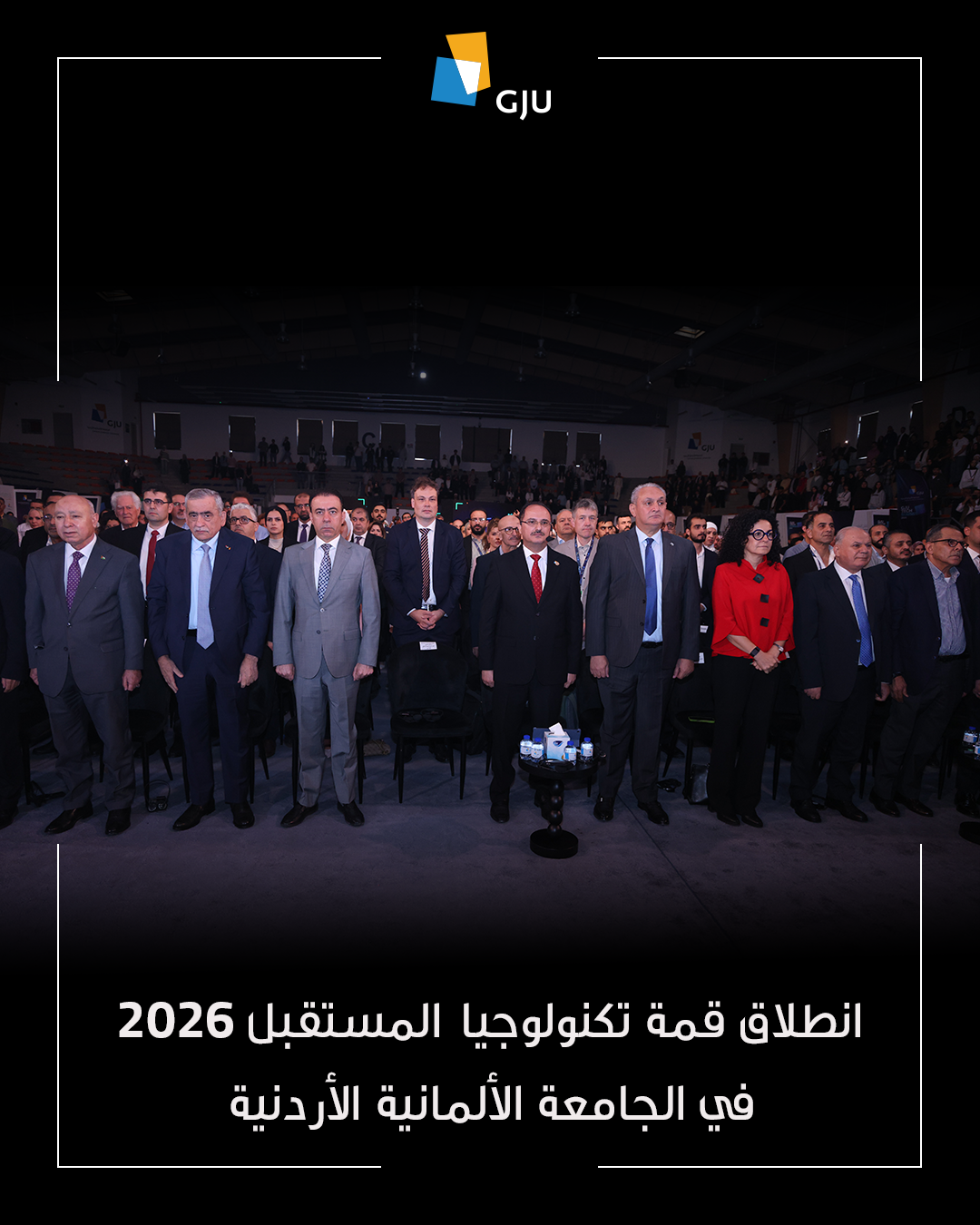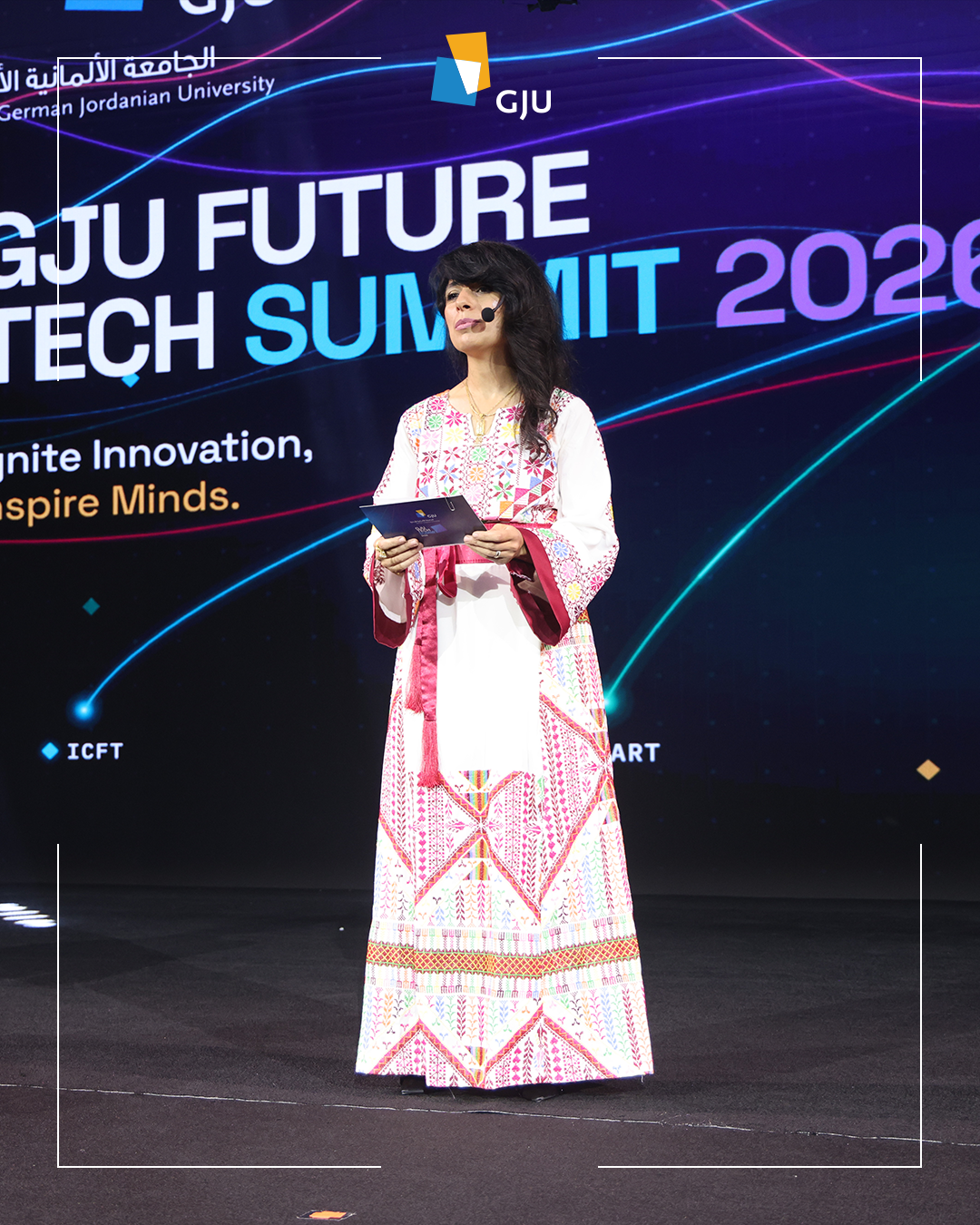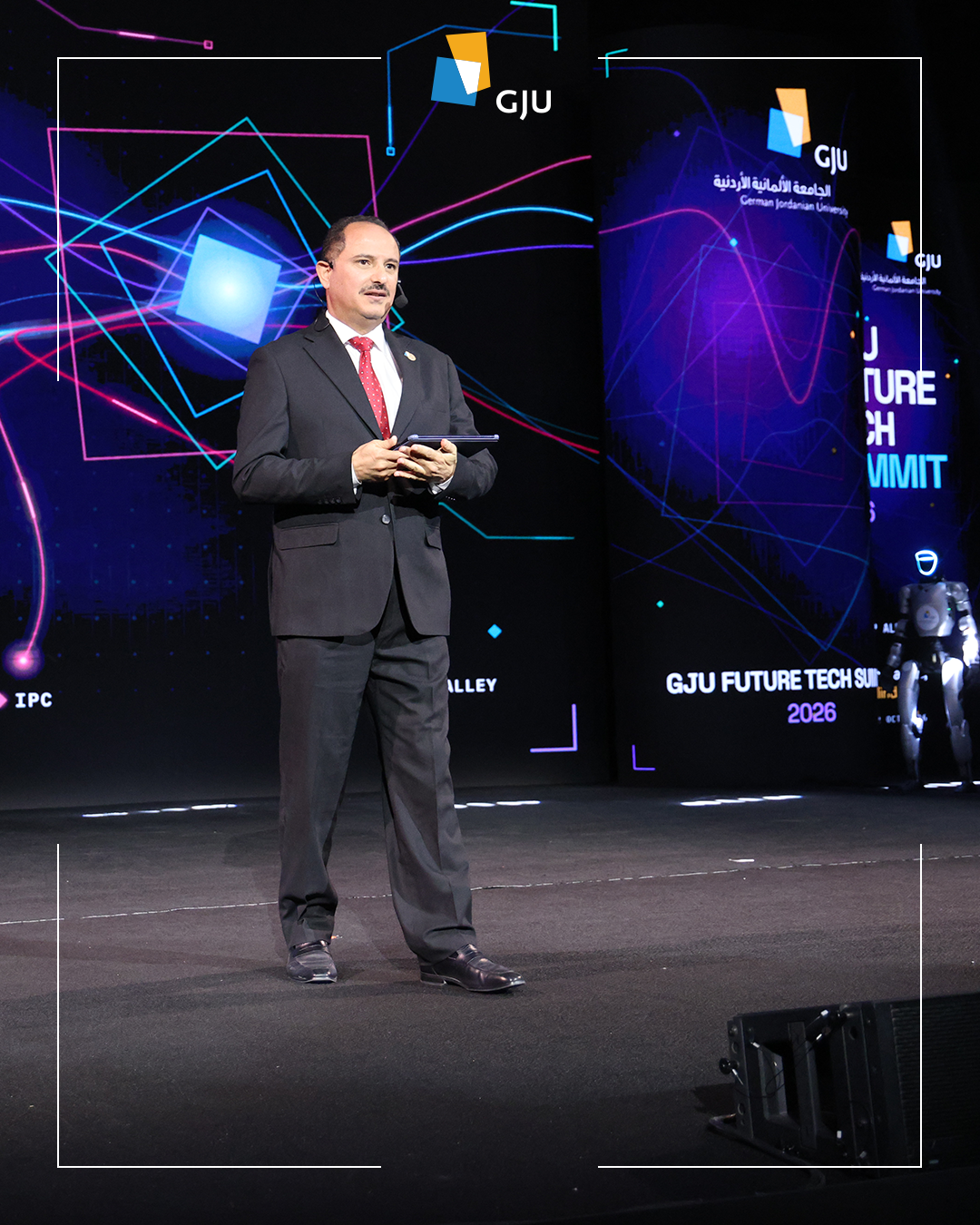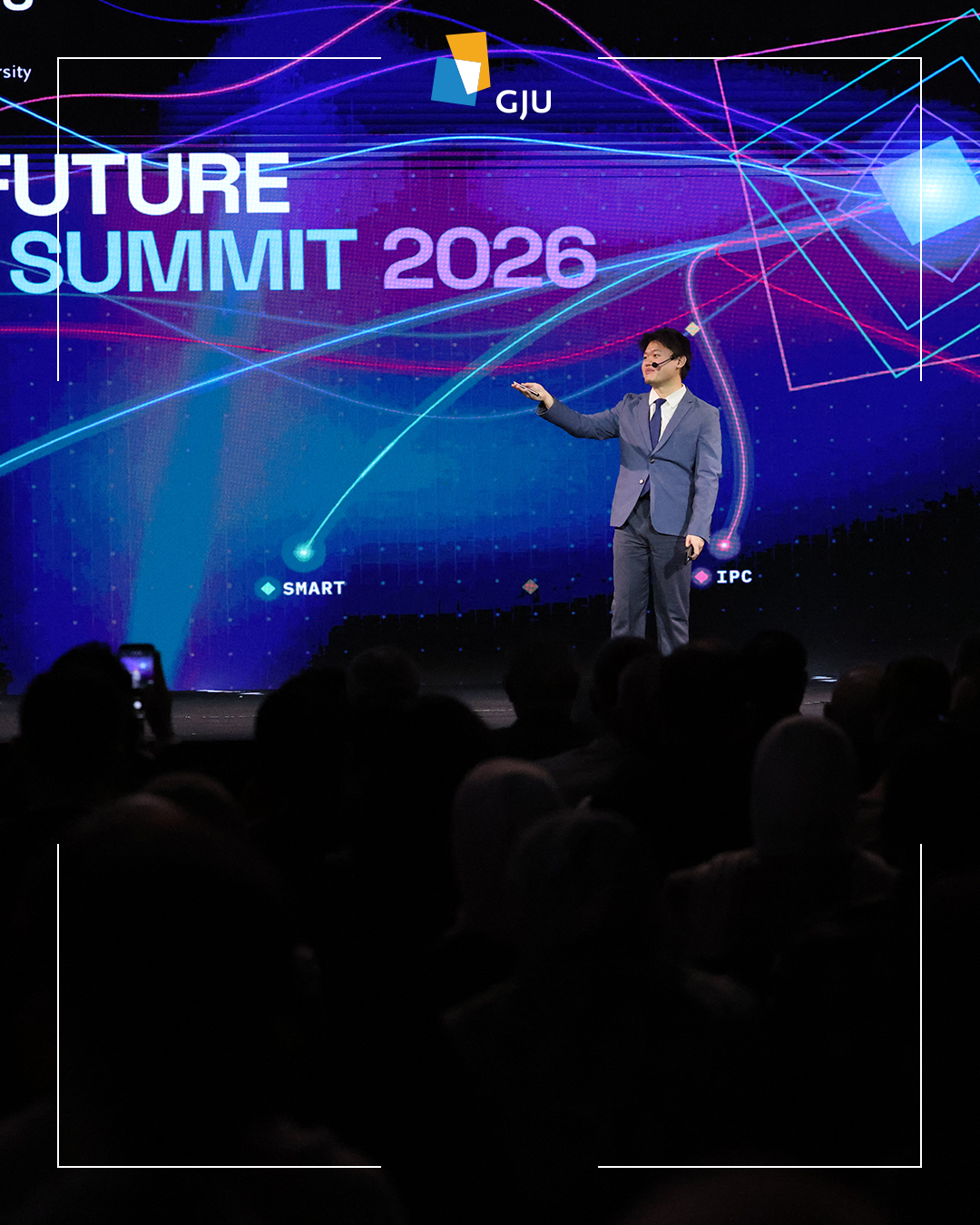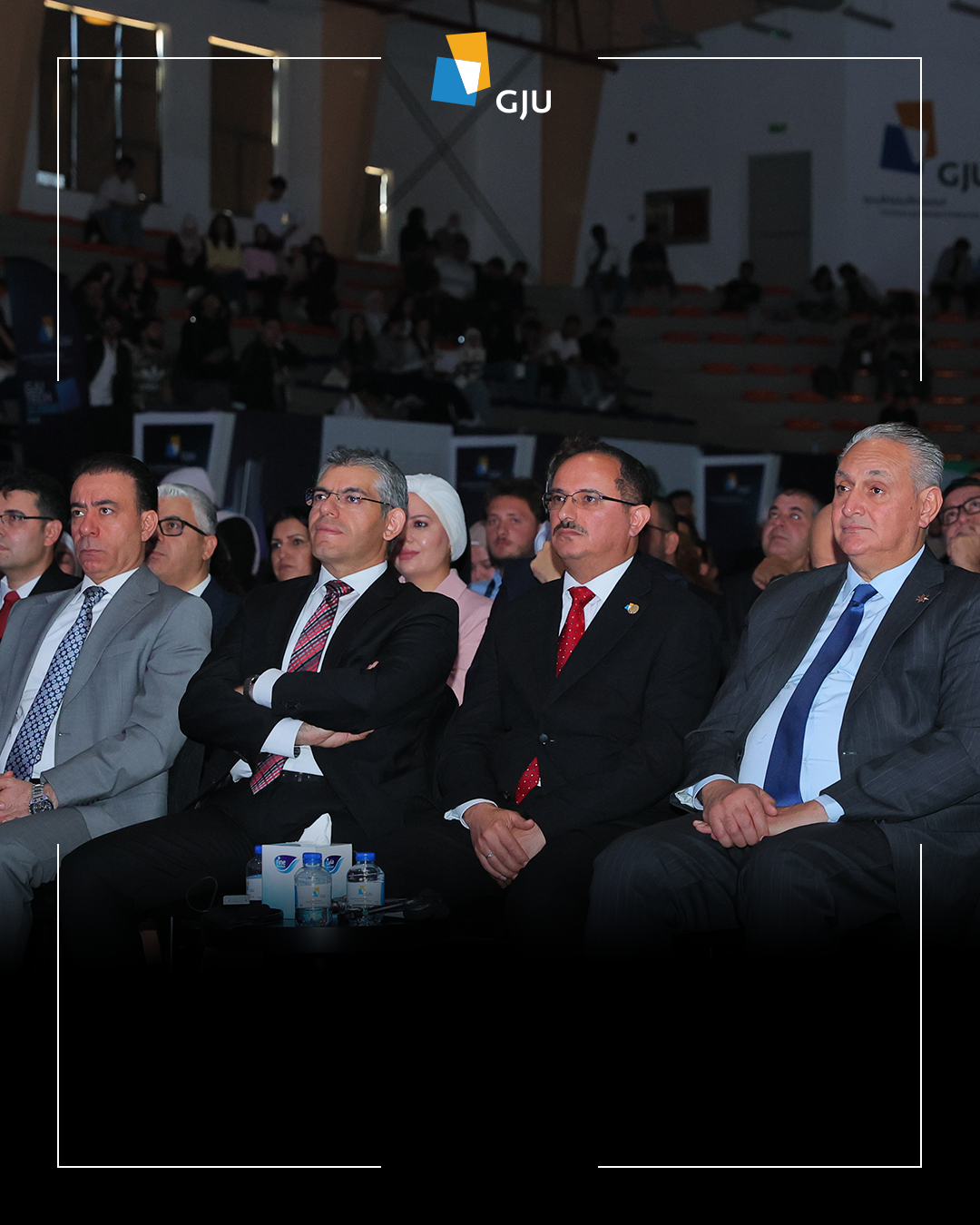

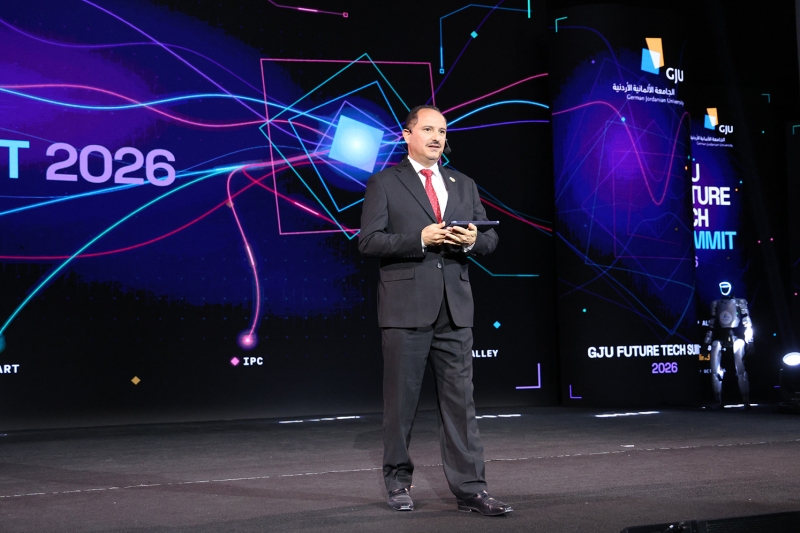
 The German Jordanian University (GJU) launched the Future Tech Summit 2026 on Monday, bringing together researchers, academics, experts, industry leaders, entrepreneurs, investors, and representatives of academic, industrial, and technology institutions from Jordan, Germany, and other countries. The event was attended by H.E. Dr. Ayman Suleiman, Minister of Environment, along with representatives of diplomatic missions and embassies in Jordan, as well as presidents of public and private universities.
The summit aims to strengthen the integration of scientific research, industrial applications, innovation, and entrepreneurship; establish strategic partnerships; accelerate technology transfer; and turn knowledge into practical solutions with economic and societal impact.
During the opening ceremony, Prof. Ala’aldeen Al-Halhouli, President of GJU, said the University continues to advance its applied education model, which connects knowledge with real-world practice and empowers young people to innovate and adapt to rapid changes in technology and the labor market. He noted that the summit reflects the University's mission since its establishment in 2005, which is founded on combining academic excellence, practical experience, and international engagement.
Al-Halhouli explained that GJU seeks to move beyond the traditional role of academic institutions by serving as a platform that brings together talent, technology, and innovation, and as an active partner in economic and technological transformation. This approach provides students with opportunities to learn and experiment, researchers with avenues to develop their ideas, industry with partners to create solutions that address its needs, and entrepreneurs with pathways to turn their ideas into projects capable of growth and expansion.
He added that the University is working to expand the impact of its research and innovation ecosystem through the Deanship of Innovation, Technology Transfer and Entrepreneurship (DI-TECH) and the Technology, Research, and Innovation Park (TRIP). These initiatives strengthen the links between scientific research and industrial applications, support knowledge-based projects, and create opportunities for more effective partnerships locally and internationally.
As part of its efforts to strengthen its presence in the international innovation ecosystem, Al-Halhouli announced the launch of the University's “Embassy” building in Jabal Amman, which will serve as an international gateway for attracting partners and investors and connecting promising projects with markets and opportunities for growth and expansion.
He also announced the launch of the Smart University Project, which will integrate artificial intelligence technologies into education, scientific research, and administration within a framework of clear ethical standards and firm human accountability. The project aims to enhance the learning experience, support decision-making, and create a more efficient university environment that keeps pace with technological developments.
Al-Halhouli stressed that technological capabilities alone cannot shape the future; they require an environment that nurtures and develops them and transforms them into tangible achievements. He emphasized that universities are responsible not only for preparing young people for future jobs but also for empowering them to create new employment opportunities and develop innovative solutions.
He noted that the summit brings together experts and innovators from more than 20 countries, offering opportunities to turn ideas into partnerships and partnerships into tangible achievements by strengthening cooperation among universities, research centers, companies, investors, and entrepreneurs.
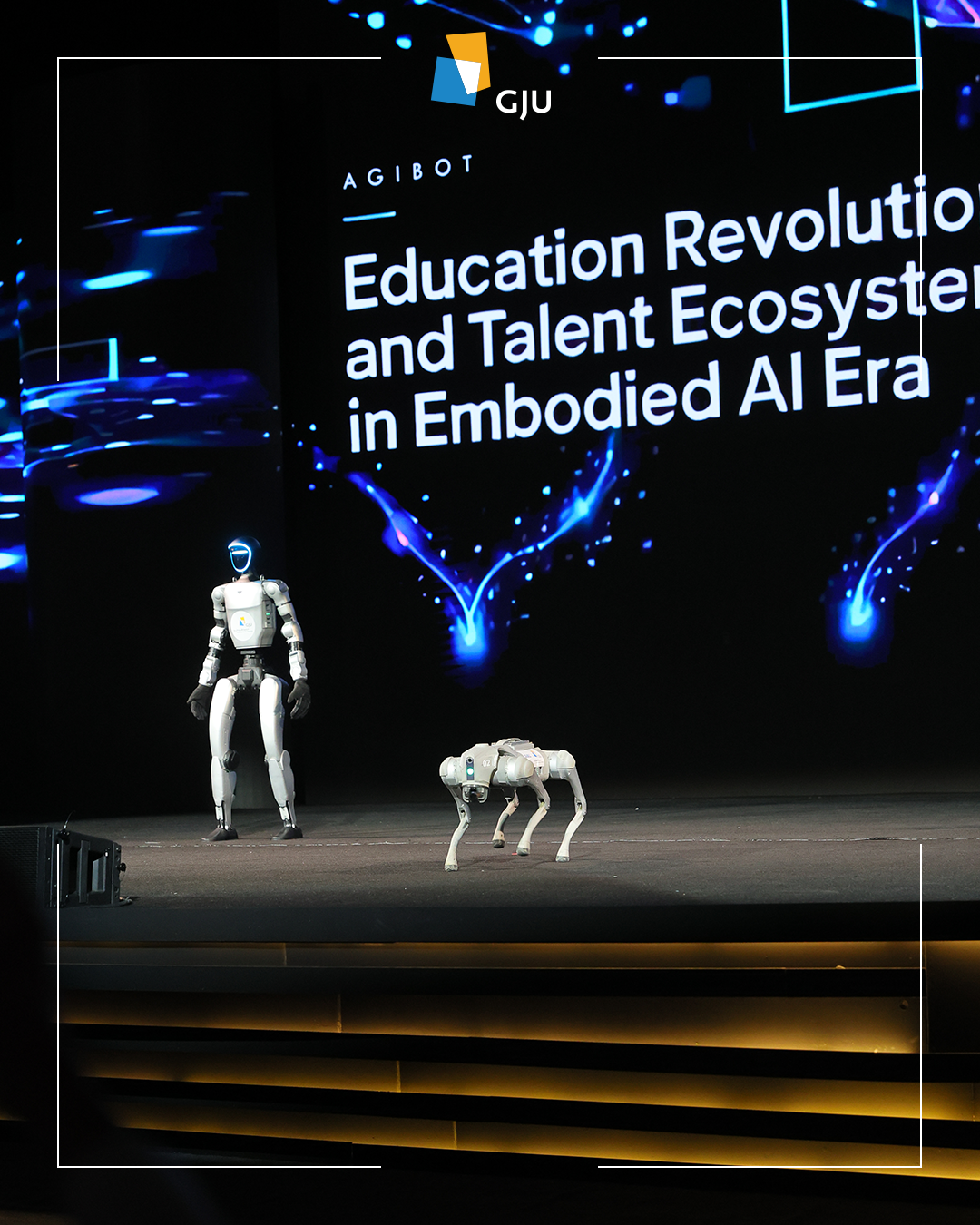
For his part, Eason Teong Yee Xun, Education Solutions Engineering at AGIBOT, discussed the future of embodied artificial intelligence and its role in advancing education and preparing future-ready professionals. He highlighted rapid developments in artificial intelligence and robotics, as well as the transition of their applications from digital environments into the physical world.
He also highlighted the importance of collaboration between universities and industry in developing curricula, conducting joint research, and providing practical training opportunities to prepare professionals capable of applying and advancing emerging technologies.
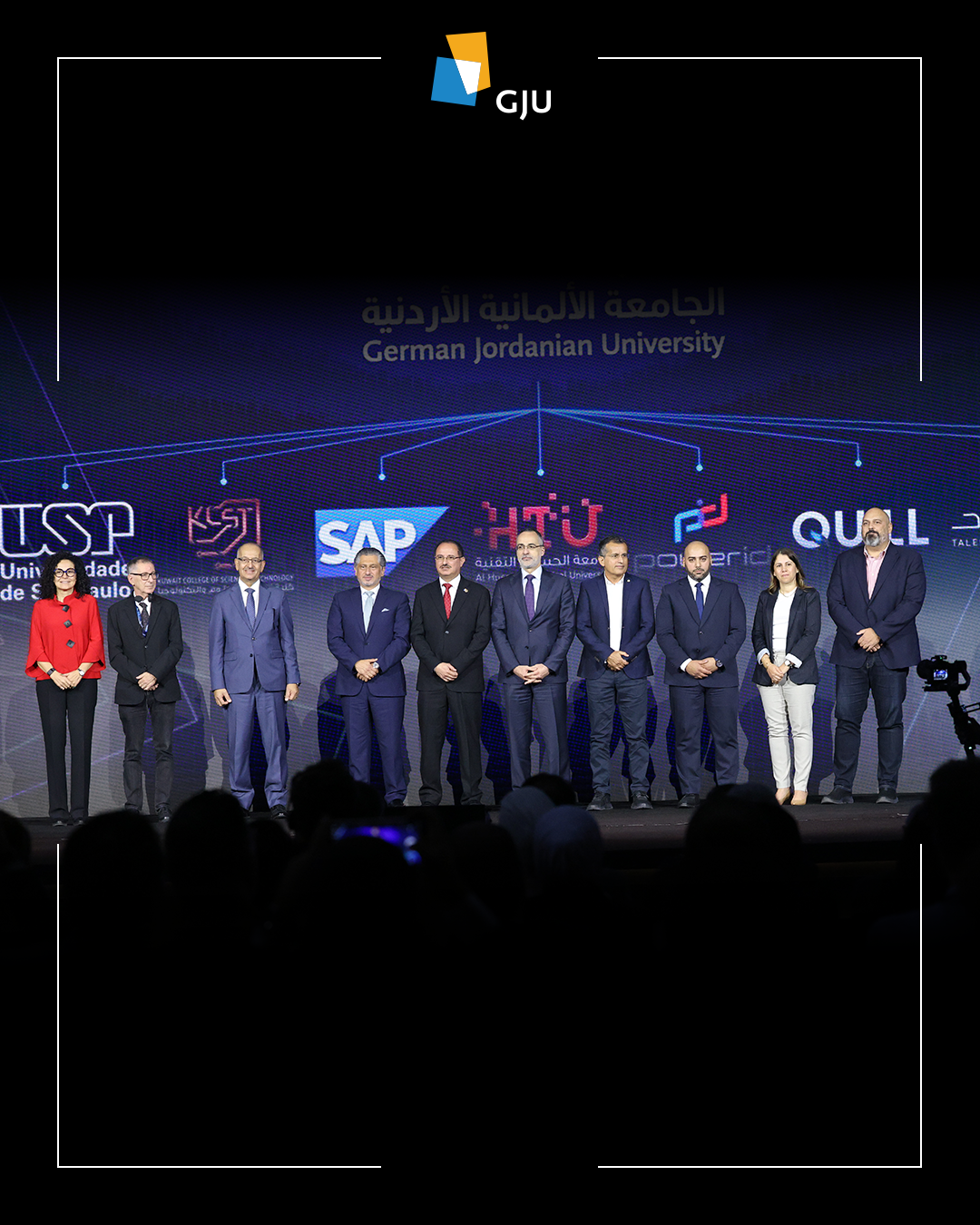
The summit also witnessed the launch of several partnerships involving universities, academic institutions, and local and international companies. These partnerships aim to strengthen cooperation in technology, innovation, and scientific research and expand collaboration between academia and industry.
The summit comprises four main components: the International Conference on Future Technologies (ICFT 2026); the Fourth International Conference on Sustainable Mobility Applications, Renewables and Technology (SMART 2026); the Industrial Partnership Conference (IPC); and Startup Alley. The program also features live demonstrations of humanoid robots, specialized sessions, networking opportunities, and the signing of cooperation agreements and research partnerships. In addition, the Junior Tech Program enables school students to explore technology applications through interactive activities at GJU's Al-Mushqar campus.
The International Conference on Future Technologies (ICFT 2026) explores the latest developments in artificial intelligence, robotics, semiconductors, electronics, intelligent systems, advanced energy, and digital technology through lectures and sessions featuring researchers and experts from international institutions.
The program also explores applications of artificial intelligence in healthcare through a session organized by the King Hussein Cancer Center, focusing on advancing medical services and improving patient care. Another session, featuring the Food and Agriculture Organization of the United Nations (FAO), examines the role of technology and innovation in agricultural development, improving productivity, and promoting sustainability and food security.
The International Conference on Future Technologies is supported by the Abdul Hameed Shoman Foundation as its Platinum Sponsor, reflecting the Foundation's commitment to advancing knowledge and scientific research and promoting student participation in scientific conferences. Its contribution covers participation costs for more than 165 students from Jordan and Palestine, giving them the opportunity to explore the latest scientific developments, exchange knowledge, and connect with researchers and specialists.
The SMART 2026 Conference focuses on scientific and engineering solutions in sustainable mobility, renewable energy, green buildings and industrial facilities, and smart cities. Its scope includes improving energy efficiency, reducing emissions, and advancing sustainable transport and infrastructure.
In the area of industrial collaboration, the Industrial Partnership Conference (IPC) provides a platform for connecting research capabilities with the needs of companies and production-oriented institutions. With the participation of industrial stakeholders from Jordan and Germany, the conference features networking sessions and specialized workshops designed to identify opportunities in research and development, innovation, technology transfer, and joint projects.
Startup Alley features approximately 50 startups showcasing their ideas, products, and technological solutions. The initiative offers opportunities to connect with investors, industrial companies, and organizations supporting innovation, alongside workshops and business meetings aimed at helping startups grow and expand their access to markets and funding.
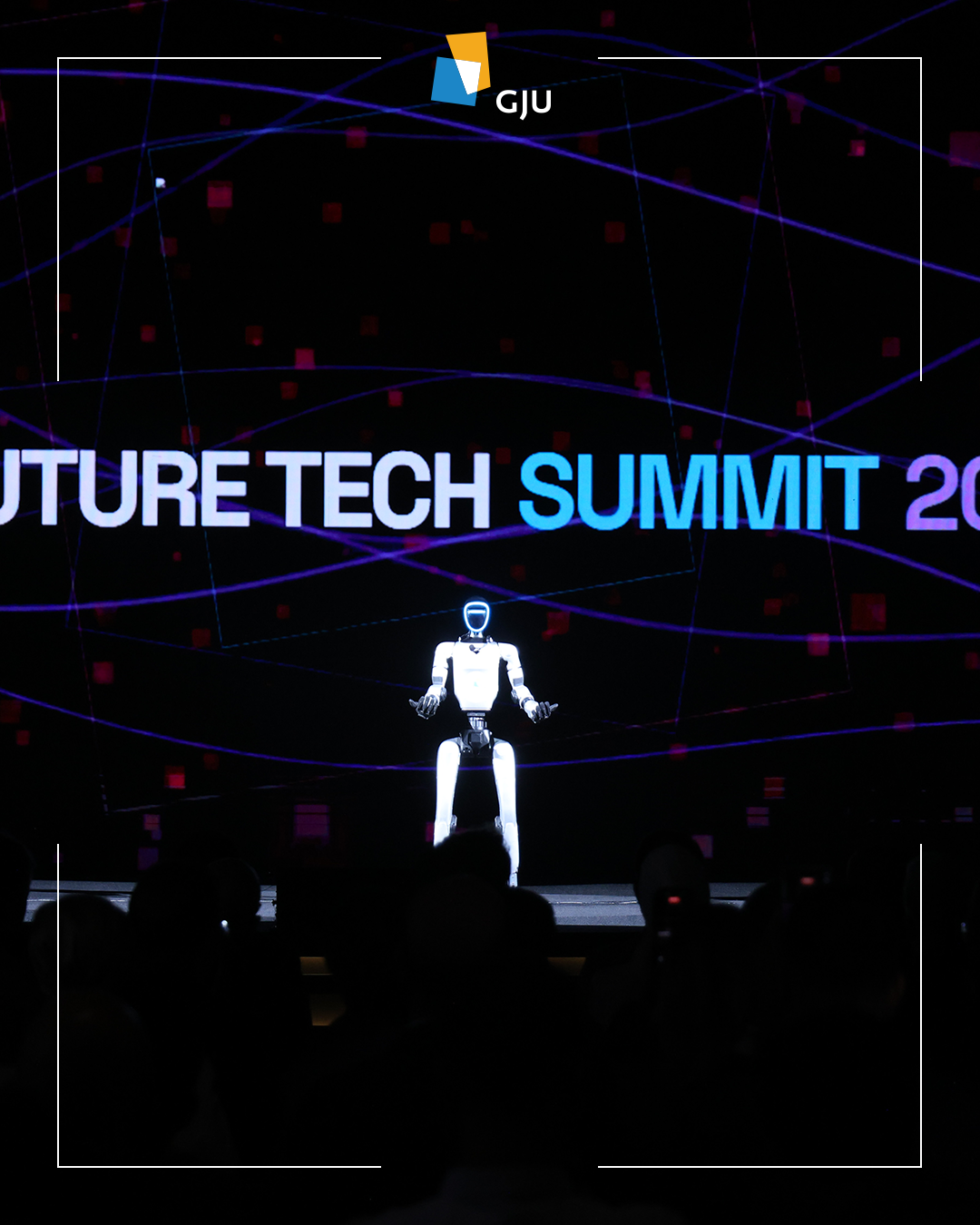
The summit also features live demonstrations of advanced humanoid robots, highlighting applications of embodied artificial intelligence and human-machine interaction. The program includes the signing of cooperation agreements and research partnerships, including agreements related to Matching Funds research funding programs, which aim to support multi-institutional projects, strengthen international collaboration, and advance practical solutions.
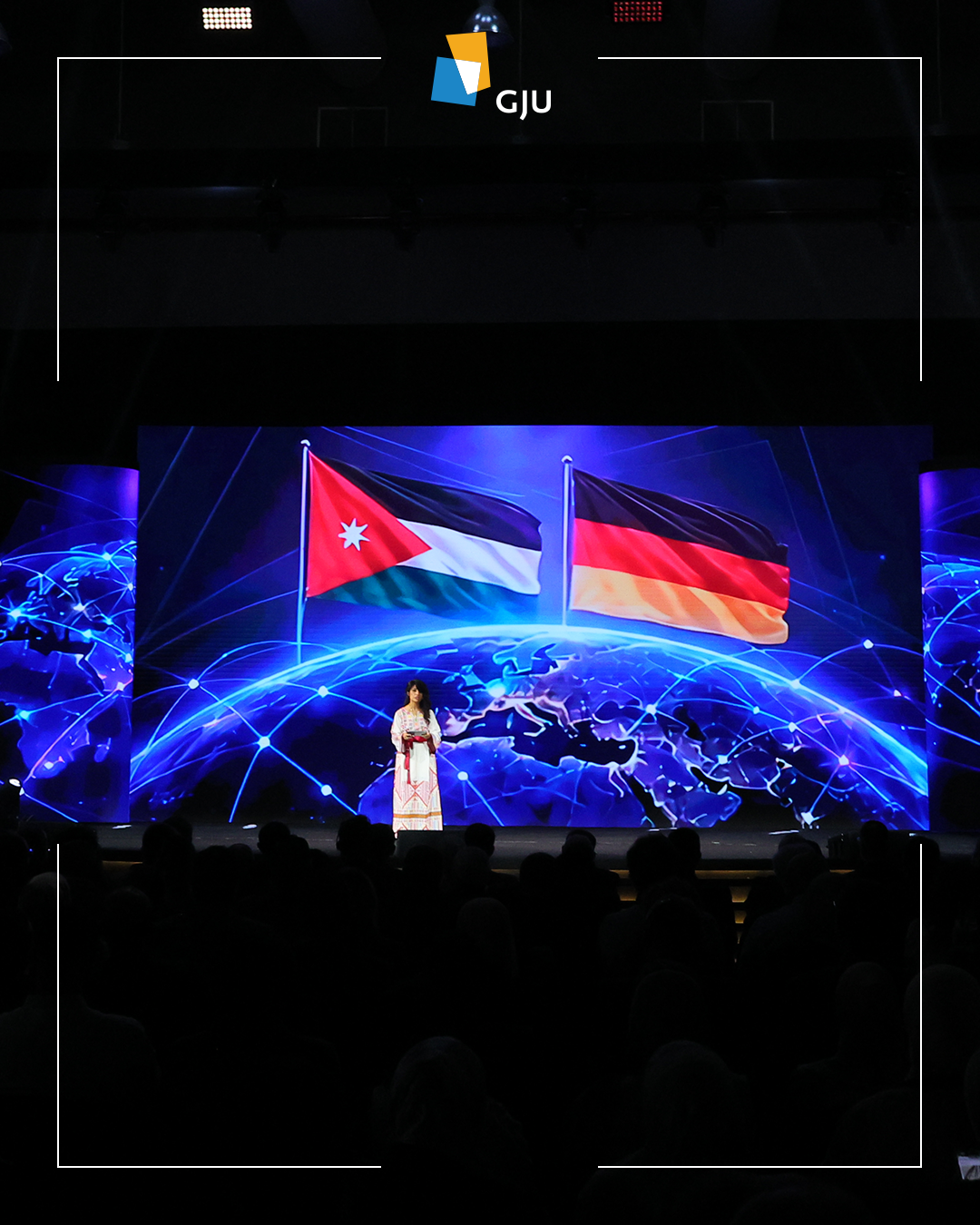
The summit reflects GJU's commitment to strengthening the role of universities in driving innovation and economic development through the integration of education, scientific research, industrial applications, and entrepreneurship. It also builds on the Jordanian-German partnership to expand international cooperation, advance technology projects, and enhance economic competitiveness.
Through the summit, the University seeks to promote the use of technology to address challenges, empower talent, and expand partnerships that transform knowledge into added value. These efforts support Jordan's advanced technology and innovation ecosystem and open new opportunities for researchers, students, startups, and industry.